Little Joe Potter
The Robot Who Looked Like MeLittle Joe Potter is a drifting cowpuncher and reputed fast gun whose claim on Washburn’s derby turns a poker loss into a fatal showdown. His brief arc makes reputation both his currency and his trap: the same public image that lends weight to his wager leaves him bound to pursue it, even when Washburn offers him the hat without a fight.
Identity and Reputation
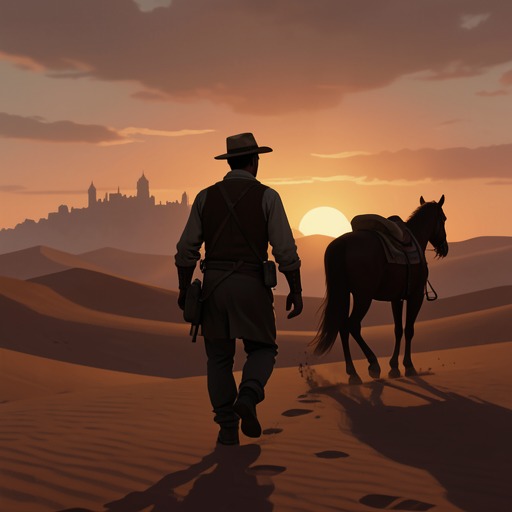
Little Joe comes up from the Panhandle and arrives in the Territory already known for a shootout at Twin Peaks. In the account relayed by Watson, he fought four X-Bar riders over a woman and killed all four, acquiring a reputation as a formidable gunman. Watson introduces the episode as news, but the story has already become local currency: people know the fight and repeat what it supposedly proves about him.
The report also distinguishes reputation from mere boasting. Charlie Gibbs, recounting what he heard from Texas Jim Claire, says Little Joe was not known as a braggart and had handled himself well at Twin Peaks. That reputation matters when he makes an audacious wager at the poker table. The people present do not dismiss him as bluffing, even though the proposed collateral is another man’s distinctive hat.
The Poker Wager
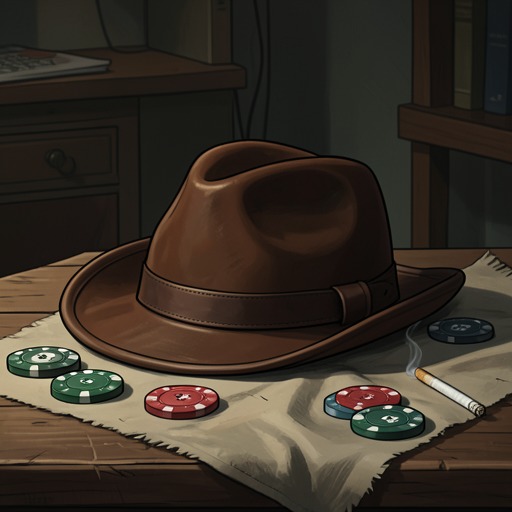
At a game near Gila Bend, Doc Dailey bets a thousand Mexican dollars on a large jackpot. Little Joe likes his hand but has no money left to stake. Doc offers to accept collateral, and Little Joe proposes Washburn’s derby. The room falls silent: taking the hat would mean taking it from the man who wears it, and the story treats that as a challenge with potentially lethal consequences.
Doc accepts the derby as collateral and offers an additional thousand for a ringside seat when Little Joe goes to claim it. Little Joe answers that Doc can watch for free if the hand is lost, because he does not expect to lose. But the cards overturn his confidence: Little Joe’s four eights lose to Doc’s four jacks. He rises, stretches, and acknowledges that Doc will get his promised view. The loss does not end the wager; it activates it. What began as a card game now sets a public obligation in motion.
The account reaches Washburn through several speakers rather than direct observation. Watson first tells him about Little Joe and the Twin Peaks fight, then directs him to Charlie for the poker story. Charlie, in turn, attributes it to Texas Jim, who was present at the game. This chain makes the derby wager part of the Territory’s circulating legend before Little Joe and Washburn meet face to face.
Washburn and the Derby
When Washburn encounters Little Joe over drinks, he is older than Washburn had expected, nearly thirty, with a craggy face, high cheekbones, and a black handlebar mustache. Little Joe raises the rumor that Washburn is leaving the Territory in a hurry and confirms that he has heard Washburn does not intend to stay long enough to give him an audience. Washburn confirms his departure. Their exchange places the wager against a practical complication: Little Joe has come to claim the hat from someone who may soon be gone.
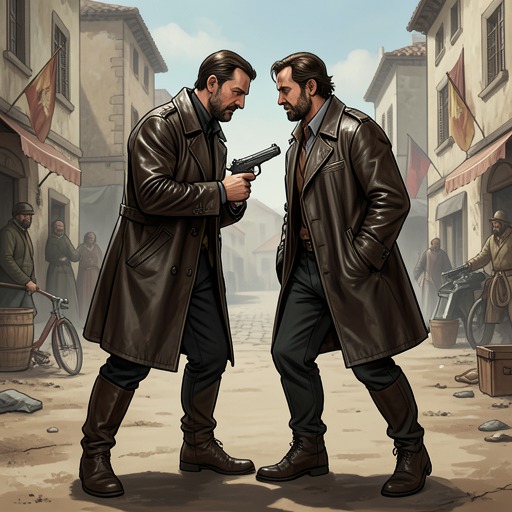
Little Joe does not simply seize it or force an immediate confrontation. As Washburn turns to leave, Little Joe stands away from the bar with both hands visible and says he cannot force a showdown. He explains that he has made a bet concerning the derby and must therefore have it. Washburn already knows the story. Rather than draw, he removes the hat, smooths it on his sleeve, and tosses it to Little Joe. Little Joe catches it while keeping his eyes on Washburn, and reacts with surprise. Washburn then leaves the saloon.
The exchange separates the object from the violence attached to it. Little Joe has secured the collateral, and Washburn has not resisted; by the terms Little Joe states, there is no need to make the claim a showdown. Yet the hat has been publicly wagered, and its return does not settle the encounter. Washburn’s departure is followed by the waiting crowd and Little Joe’s call asking whether he has come back for the hat. Washburn returns, saying that he has come back because it is their dance.
Showdown and Ending
The two men laugh at the absurdity of the situation, then suddenly draw. Smoke and dust briefly obscure them. When they clear, both men are still standing, but Little Joe’s gun points down; he twirls it, lets it fall, and collapses. Washburn holsters his own weapon, goes to him, and lifts his head. Little Joe makes one last wry remark about how short the dance was. Washburn apologizes, but Little Joe no longer hears him. The scene confirms that Little Joe has died and that Washburn has survived the duel.
Little Joe’s death completes the movement from borrowed reputation to direct encounter. At first he exists for Washburn as a story about four defeated riders and a lost poker hand. At the saloon, he is neither the invulnerable figure of rumor nor a simple aggressor: he explains the bet, keeps his hands visible, and acknowledges that he cannot compel Washburn to fight. Yet the comic language of a dance cannot soften the result. The hat passes to him; the showdown that seemed avoidable takes place anyway, and the celebrated gunman does not survive it.
Narrative Role
Little Joe’s plot is shaped by the rules of The Movie, where talk scenes are kept short and other people are given a share of the action. His story arrives through successive retellings before it becomes a scene between the two men, linking reputation, communal expectation, and performance. The crowd watches the confrontation, and the exchange about the dance frames violence as a familiar Western ritual even while its ending is irreversible.
The derby gives that ritual a concrete focus. It is first proposed as collateral, then handed over without resistance, and finally remains part of the encounter when Washburn returns. Little Joe’s distinctive position is that he does not need to invent a reputation: others have already built one from the Twin Peaks fight and repeat it as evidence of what he can do. But the story ends by separating reputation from outcome. The man known for killing four opponents is himself killed in a duel with Washburn.